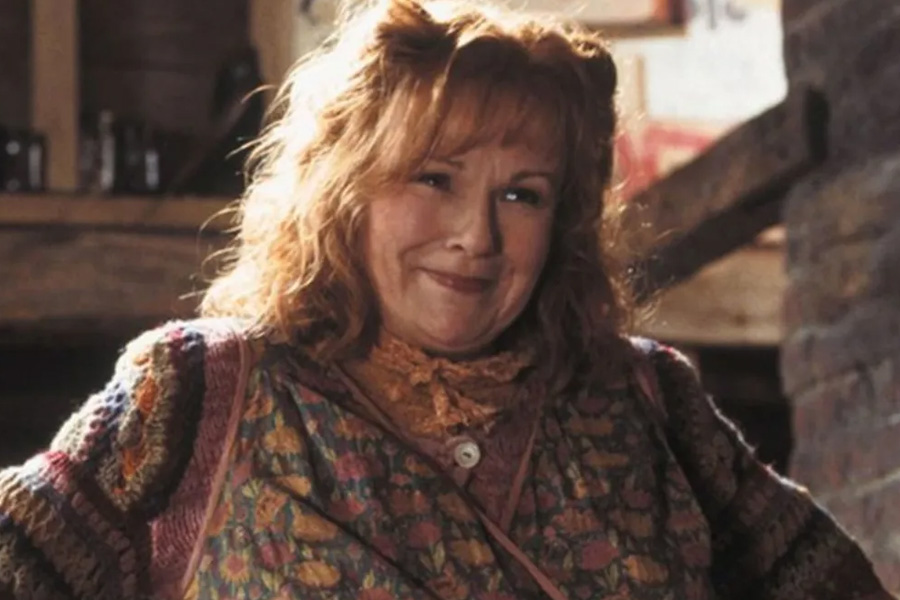
I think about presence when I think about Julie Walters Harry Potter. She has amazing energy that fills a room without speaking. Sometimes in one scene, she’s humorous, aggressive, tender, and intimidating. That is why she was so popular in British film and television and why her portrayal as Molly Weasley in the Harry Potter movie is still remembered like a brilliant lamp in a long hallway.
Her life goes beyond acting. It also follows a working-class Birmingham girl who became one of the most recognized performers of her generation. Edgbaston to the world stage was a winding journey. It curved past obstructions, gathered force, and arrived confidently, like a river.
Early Life and Background
Julie Walters was born in 1950 in Edgbaston, Birmingham, and grew up in a family shaped by ordinary work, practical values, and strong roots. I find that background important because it helps explain so much about her style. She never seems airbrushed. She feels lived-in, grounded, and observant, like someone who understands the weight of real life.
Before acting took over her life, she trained and worked as a nurse. That detail matters. Nursing gave her a direct view of people at their most vulnerable, and I think that kind of experience can sharpen an actor’s instincts. It teaches patience, timing, and compassion. Walters would later bring those qualities into roles that demanded emotional honesty as well as comic skill.
Her early years were also marked by family history that reached beyond Birmingham, especially through her mother’s Irish background. That mixture of Midlands grit and Irish heritage added another layer to her identity. It helped shape someone who could play working women, mothers, dreamers, eccentrics, and survivors with equal credibility.
Family Members and Personal Relationships
Thomas Walters
Thomas Walters was Julie Walters’s father. He worked as a builder and decorator. That profession says a lot about the world she came from. It suggests hands-on labor, practical skill, and a home life where work was not abstract. It was visible. It had dust, tools, and effort attached to it. I see Thomas Walters as part of the sturdy frame holding up Julie’s early life.
Mary Bridget O’Brien Walters
Mary Bridget O’Brien was Julie Walters’s mother. She was an Irish Catholic woman from County Mayo and worked as a postal clerk. Her background added a strong Irish thread to Julie’s family story. In public family history, her side of the family is often described with care because it reflects migration, resilience, and the effort of building a life in England while carrying older family ties with her. I think of Mary Bridget as the emotional center of the family tree, the root system beneath the visible branches.
Grant Roffey
Grant Roffey is Julie Walters’s husband. Their relationship has a memorable, almost cinematic beginning. They met in the 1980s and later married in 1997 in New York. He has been described as an AA patrol man, and the two built a quiet life together away from the noise of show business. Their partnership has the feel of something durable rather than flashy. It is the sort of relationship that does not need to announce itself loudly to be strong.
Maisie Mae Roffey
Maisie Mae Roffey is Julie Walters’s daughter and only child. Born in 1988, she represents the deeply personal side of Walters’s life that many fans only glimpse from a distance. Famous parents often live under a spotlight that flattens them into headlines, but family life remains more textured than that. Maisie Mae is part of the private world that gave Walters a place to return to after premieres, award ceremonies, and long filming schedules. I see her as the anchor in a life that otherwise moved across stages and studios.
Acting Career and Major Achievements
Julie Walters built her career with astonishing range. She did not stay in one lane. She moved between comedy and drama with the confidence of someone crossing a familiar street. Her breakthrough came with Educating Rita, where she proved she could carry a major role with wit, intelligence, and emotional depth. From there, her career only expanded.
She became known for television work with Victoria Wood, and that partnership helped define an era of British comedy. She also appeared in major dramas, stage productions, and films that reached global audiences. Billy Elliot showed her ability to bring heart to a family story. Calendar Girls gave her warmth and comic spark. Mamma Mia! showed her broad appeal. Mo revealed a more serious register and brought another level of critical praise.
Then came Harry Potter. As Molly Weasley, Julie Walters entered one of the most beloved fantasy worlds of modern cinema. Molly is a character built on love, fire, and maternal force. She is protective, funny, and absolutely unwilling to be underestimated. Walters played her with the kind of strength that comes from love rather than domination. That performance gave the Weasley family emotional heat, like a hearth fire at the center of a winter house.
Her awards cabinet is crowded. She received major BAFTA recognition, a BAFTA Fellowship, an Olivier Award, a Golden Globe, and two International Emmys, among other honors. She was also made a Dame in 2017. Those honors matter, but they do not fully capture the practical magic of her work. She has long been an actor whom audiences trust.
Public Image, Net Worth, and Influence
One of Britain’s best actors, Julie Walters, has never seemed interested in celebrity. That alone distinguishes her. She’s always been honest, which is refreshing in a polished industry.
Her net worth is estimated at $2 million, however these are estimations. I care more about her legacy. She worked wisely and steadily. She’s made characters distinctive without obscuring herself.
Her influence goes beyond accolades. She shaped British acting versatility. She proved that a performer can transition between class comedy, emotional drama, family cinema, and national treasure without losing credibility.
Extended Career Timeline
1950s and 1960s
Julie Walters was born in 1950 and spent her early years in Birmingham. She grew up in a working-class environment that would later inform many of her performances.
1970s
She trained in drama after working as a nurse and entered professional acting. Her collaboration with Victoria Wood began during this period and became one of the defining creative relationships of her life.
1980s
This decade brought major recognition. Educating Rita turned her into a star, and television work expanded her reach. Her relationship with Grant Roffey also began during this period, adding a major personal chapter to her life.
1990s
She continued to move between stage, television, and film. Her career became increasingly broad, and by the end of the decade she was already a household name.
2000s
This was another peak period. Billy Elliot, Calendar Girls, Mamma Mia!, and Harry Potter gave her global recognition and deepened her standing with audiences of different generations.
2010s
Her performance as Mo, her continuing awards recognition, and her damehood marked this period as one of honors and respect. She remained active while also becoming more selectively visible.
2020s
Public discussion of her health made many admirers appreciate her even more. Recent appearances in cultural coverage and public tributes showed how deeply she remains woven into British cultural memory.
FAQ
Who is Julie Walters in Harry Potter?
Julie Walters played Molly Weasley in the Harry Potter films. Molly is the heart of the Weasley household, a fiercely loving mother and one of the most memorable adult characters in the series.
Who are Julie Walters’s family members?
Her father was Thomas Walters, her mother was Mary Bridget O’Brien, her husband is Grant Roffey, and her daughter is Maisie Mae Roffey.
What is Julie Walters best known for besides Harry Potter?
She is best known for Educating Rita, Billy Elliot, Calendar Girls, Mamma Mia!, Mo, and her long-running work with Victoria Wood.
What makes Julie Walters so admired?
I would say it is her range, her truthfulness, and her ability to make every character feel human. She brings heat, timing, and soul to the screen.
Is Julie Walters still important in British culture?
Yes. Her work is still widely remembered, quoted, and admired. She remains one of the defining performers of modern British television and film.